
Peekskill Previous Residents by Era
Different sources answer different parts of an address-history question. County deeds trace recorded ownership and legal descriptions. Directories and census schedules can place a household at a dated address. Assessment cards and maps show the property record or building footprint. Probate and obituary paths can help when the local address trail ends. The years below are coverage clues, not a promise that every address, person, or image is available online.
| Source | Years it covers | Where held | What it shows |
|---|---|---|---|
| County deed index and books | 1680s to current index; older books and indexes about 1903/1907 | WRO, Westchester Archives, FamilySearch | Transfers, legal descriptions, and possible family or address clues |
| Peekskill directories | Selected 1875 to 1959 runs, with gaps | NY State Library, Field Library, and repository copies | Dated address and household clues |
| Federal census | Released schedules through 1950 | NARA, FamilySearch, and libraries | Household composition and ward or address context |
| Property cards and viewer | Cards around 2006; viewer tax data from 2010 | City and county property workflow | Historic parcel and assessment snapshot, not current proof |
| Sanborn maps | 1900 and July 1911 | Westchester Archives and Library of Congress | Building footprint, use, and street or house-number evidence |
| Surrogate and probate material | 1782 to 1909 Archives series | Westchester Archives and the appropriate file custodian | Estate, executor, heir, and property leads where access allows |
For a recent transfer, begin with the parcel and deed. For a household question in a known year, start with the closest directory and census pair. For a building question, use the map and card dates as physical-property evidence rather than as a list of people.
Start a Peekskill Address With the Parcel
A current address needs a durable identifier before it can be taken backward. The City of Peekskill property-card workflow accepts the street address, owner name, or Section-Block-Lot number. Accept the county GIS disclaimer, verify the red “Peekskill” label, reveal the full parcel balloon, and use the blue PDF link. Record the SBL, situs address, and owner mailing address separately because a tax mailing address can point elsewhere.
The City warns that the parcel viewer’s tax data is from 2010 and the scanned cards are around 2006. Those records are valuable for a dated checkpoint, but they cannot establish today’s owner. For the current link in a previous-residents trail, cross-check the assessor’s current data and the most recent recorded deed. The assessment roll can also give class, exemptions, districts, value fields, and a deed book or page reference.
When the address appears in varying forms, the SBL and legal description usually carry the chain more reliably than a mailing label or ZIP. Preserve the exact address spelling and date from each source.
Trace Peekskill Previous Residents Through Deeds
A deed chain follows ownership backward from the present parcel. It does not automatically identify everyone who lived there, but it provides the legal trail that holds the property together when street numbers change. Westchester Records Online, or WRO, is the current entry point for land records. Use the owner name together with the SBL, legal description, municipality, dates, spouse names, and book or page details when the index exposes them.
- Use the current assessor record to capture the owner, SBL, situs address, and legal description available for the parcel.
- Search WRO for the current owner as a grantee and locate the purchase deed. Save the recording date, instrument details, and description.
- Read that deed’s seller, or grantor, as the likely prior owner of the same property. Confirm with the legal description rather than a street number alone.
- Search that seller as a grantee to find the earlier purchase. Repeat the same comparison for each older transfer.
- When WRO’s accessible material ends, continue with the County Archives deed books and indexes, using the recorded book, page, legal description, map sheet, and adjoining-owner clues.
- Grantor
- The person or entity transferring an interest in a recorded instrument.
- Grantee
- The person or entity receiving that interest, often the buyer in a deed.
- Chain of title
- The ordered series of recorded transfers that connects one owner to an earlier owner of the same parcel.
- Legal description
- The parcel wording in a deed, such as a lot, block, map reference, or metes-and-bounds description. It can remain useful when an address format shifts.
Keep an unresolved item unresolved. A seller’s later deed may point to another recorded transaction, but it does not prove that person’s physical presence at a later address.
When Peekskill WRO Becomes Archives Work
WRO advertises deed and other indexes from the 18th century to current records. A search can begin free, while images and reports require account registration and a paid subscription. The authenticated live search screen was not available during the research, so the exact current grantor and grantee fields, image dates, and fees should be checked in WRO rather than inferred from an older interface.
Westchester Archives holds the older original deed indexes through 1907 and deed books through about 1903, with grantor and grantee coverage from the 1680s. Its research-by-mail service can search documented historical groups, including deeds, maps, court, naturalization, incorporation, and estate material, after payment is arranged. Researchers can also ask about reading-room and reference access. This split explains why one address chain may move from the portal to books, indexes, or an archives request.
The Archives records are especially important because Westchester’s early courthouse history involved fires and later record-series splits. The safe approach is to search the surviving series and their descriptions, not to assume one uninterrupted ledger.
Pair Peekskill Directories With Census
Directories add household-level clues that recorded transfers cannot supply. The New York State Library lists Peekskill on film for 1875; 1885-86; 1892-93; 1896; 1902-03; 1919; 1927-29; 1931; and 1940-42. Other reel guides point to runs through 1959 with gaps, but a reel guide is a finding aid and a scan or holding still needs verification. Search the address or street in a reverse or criss-cross volume when one is available.
Pair the closest directory with an available federal census year from 1870 through 1950. Record spelling variants, initials, address form, and the source date. Then compare the directory, census, deed, and newspaper separately. A directory entry is a dated clue, not a complete household proof, and the precise Peekskill reverse-directory holdings remain a research gap.
The New York State Library directory holdings provide the confirmed film-year starting points for previous-residents research.
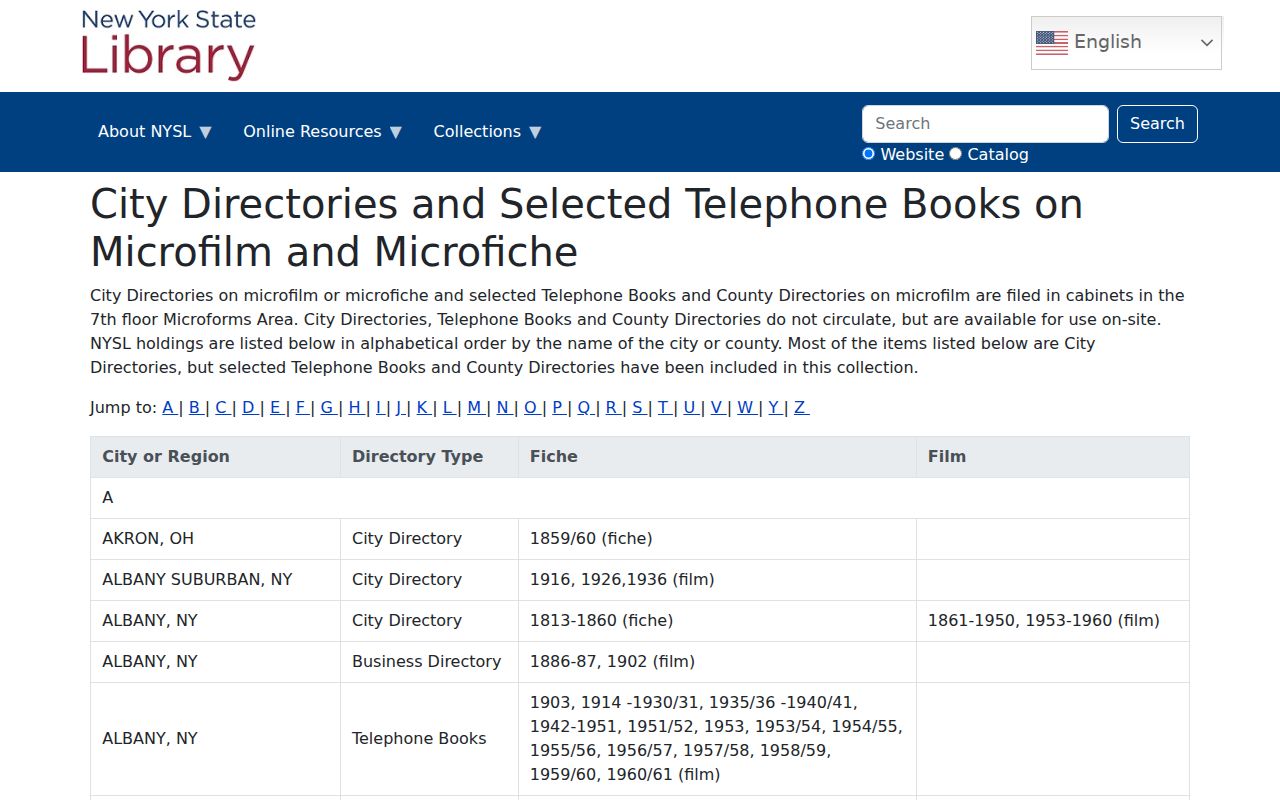
The listed years show why an address history may have long gaps between usable volumes. The broader historical collections remain organized in the Peekskill Directory Book.
Peekskill Sanborn Footprints and Numbers
Sanborn maps are a strong check when a prior address does not appear in a current map. Westchester Archives lists a 1900 Peekskill, Verplanck, and Buchanan microfilm set. The Library of Congress July 1911 Peekskill set has 37 sheets. These maps show building footprints, use, material, height, lot boundaries, hydrants, water mains, fire features, and many street or house-number details.
Use the map to test whether the building existed and how the street was labeled in that period. Pair its evidence with an SBL, legal description, directory, or deed. A map can locate a structure but cannot establish a person’s presence there. That distinction is important when a property changed hands without a clear published household entry.
Note: The 1900 and 1911 sources create an unusually useful two-date comparison for the same Peekskill street and building footprint.
Peekskill Local History at Field Library
The Field Library is the most documented local-history stop when deeds and directories leave a gap. Founded in 1887, it highlights Couch family genealogy and local-lore material. Its Community History Archives describe a free collection of newspapers, photographs, maps, directories, and community records, and its digitized newspaper route includes Peekskill titles. Ask the library about reverse directories, yearbooks, obituary files, microfilm, and database access instead of assuming a particular item is online.
The municipal historian listing is currently vacant. For a historical question that City Hall cannot answer, Field Library, the Westchester Historical Society, County Archives, and the New York State Library are the documented alternatives. The historical society’s cemetery index includes Peekskill Hillside Cemetery and Presbyterian Church Yard, while its reading room was temporarily closed when checked.
Field Library is a local starting point for the newspaper, map, and directory layer of a Peekskill previous-residents search.
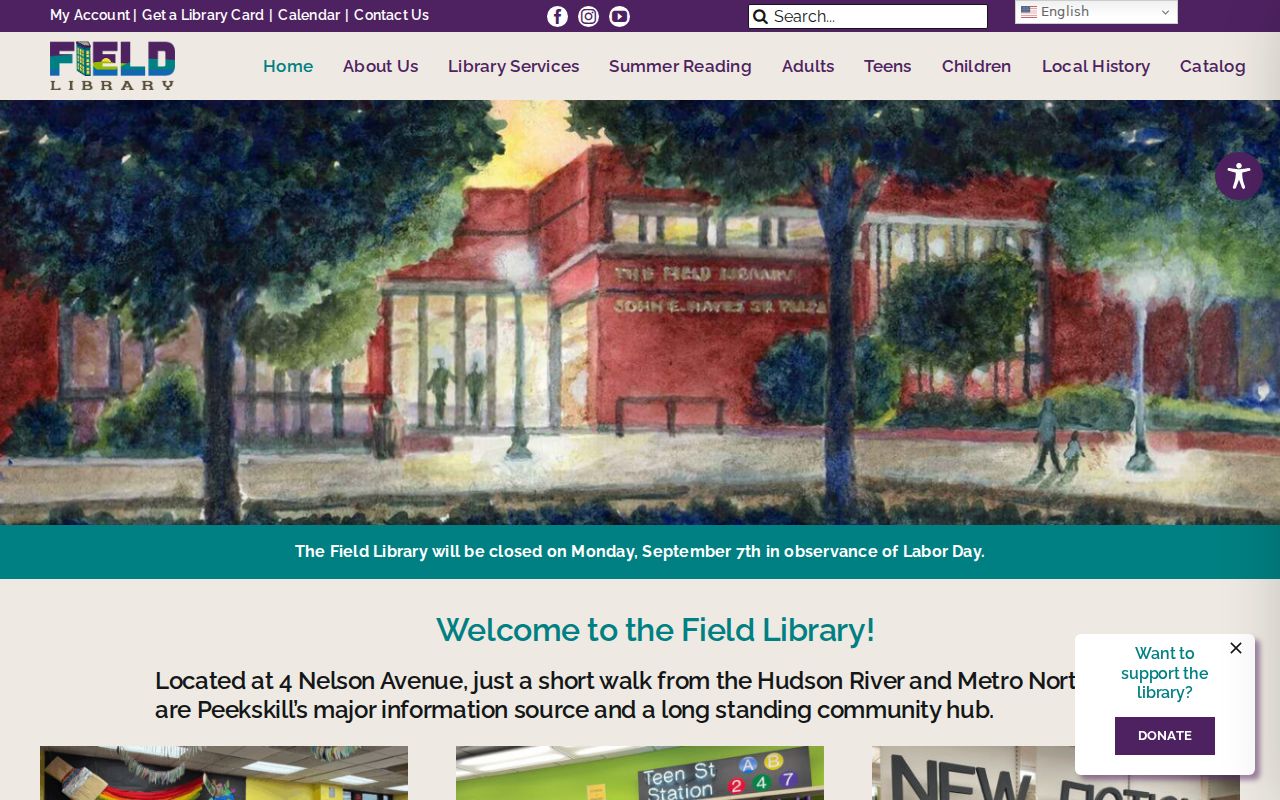
The library is most helpful when the request is narrow: bring the address, date range, name variants, and the record type that would resolve the next gap.
Keep a Peekskill Address Continuity Log
No official source located a specific Peekskill street-renumbering or renaming project with a confirmed year. That is a real limit, not a reason to treat matching numbers as conclusive. Preserve the original address form, postal label, municipality, county, ZIP, SBL, legal description, map sheet, lot dimensions, and adjoining owners. Compare a sequence of directory street indexes and maps when a number seems to jump.
City Map 33.11 can supply useful parcel vocabulary, including Woods III, Villa at Woods, Pines, Orchards, Lofts, Hillside, and Fields at Chapel Hill. A development name may bridge an incomplete old address, particularly on a condominium or common-owner tract. Use it as a search variation alongside, not instead of, the legal description and tax-map evidence.
Postal geography also needs care. ZIP 10566 reaches Peekskill and portions of Cortlandt, while 10567 is associated with Cortlandt Manor and portions of Cortlandt and Yorktown. A postal label and a city record may therefore describe different geographic systems.
Peekskill Requests, Probate, and Endpoints
No public Peekskill Building or Code search portal was located. Request a defined record by address or SBL and date range through Building and Code at 914-734-4140, or use the City Clerk’s FOIL route for covered municipal records. Ask for the record series, not a broad investigation of a person. Released permit or inspection material may date changes to the property, but availability and redaction depend on the file.
When a dated directory entry disappears, search digitized newspapers for obituary or legal-notice clues, then use the Westchester Surrogate index, estate file route, cemetery index, and next deed. Archives research-by-mail covers estate records from 1782 to 1909. Later files can have different access rules, so provide the decedent name, year, and case details where known. An executor or heir named in a file is a lead to verify, not proof that every relative lived at the address.
Limits on Peekskill Previous Residents
Property and deed sources follow parcels and recorded parties. They do not create a complete household history. Historical directories contain publication gaps and may use initials or variant spellings. Census releases have date limits. Protected voter records, Address Confidentiality Program participants, DMV information, utility customer data, sealed files, and sensitive fields remain outside an ordinary address search.
Keep the purpose narrow: family history, property history, estate research, or personal curiosity. Do not post sensitive details or attempt to bypass redactions. When a fact matters, verify it with the official custodian and preserve the source date that supports it.
Lawful use. Peekskill previous-residents research is for personal address, family, and history questions. Do not use it to track, threaten, or harass any living person.